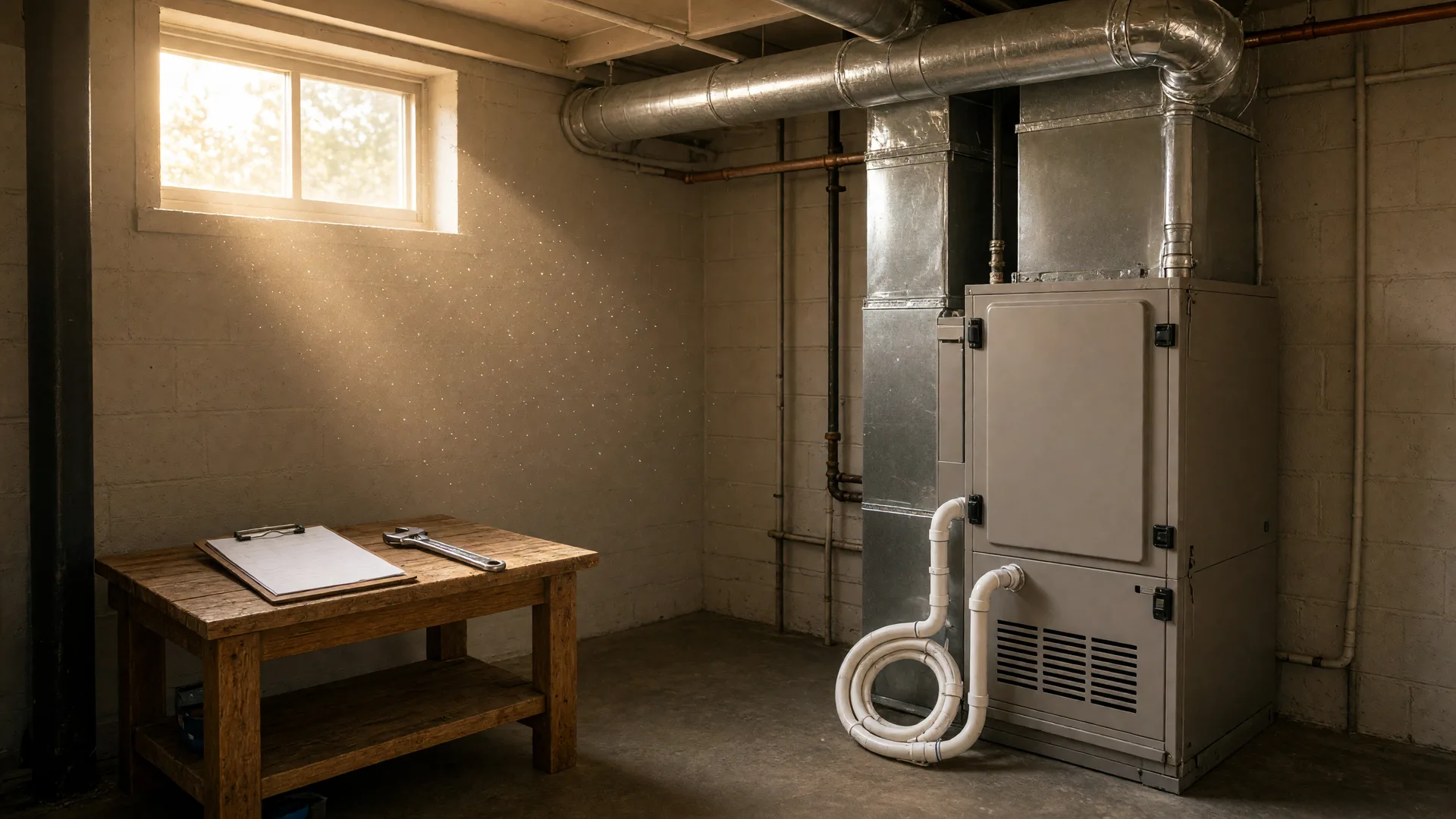
When the first cold night of November settles over Moorestown, the furnace in a colonial off Chester Avenue, a mid-century ranch near Hartford Road, or a newer build toward Borton Landing Road becomes the most important machine in the house. It is also the one most homeowners ignore until it stops working. A furnace that has not been serviced in years can lose efficiency, leak carbon monoxide, or fail at the exact moment temperatures drop into the teens. None of that is inevitable.
This guide walks Moorestown homeowners through how often to service a furnace, what a tune-up actually includes and what it costs in New Jersey, how often to change the filter, which local home types need special heating care, and the honest math on when to repair a furnace versus replace it.
Why Does Annual Furnace Maintenance Matter in Moorestown?
Moorestown's heating season runs from roughly October into April, five to six months of steady use for a system that sits idle all summer. Over that stretch, a neglected furnace works harder, burns more fuel, and quietly develops the small problems that become expensive failures in February. The United States Consumer Product Safety Commission recommends a yearly professional inspection for fuel-burning heating systems, and most manufacturers require annual maintenance to keep a furnace warranty valid. If a heat exchanger develops a crack that goes unnoticed, carbon monoxide can enter your living space, which is why the annual check is as much about safety as it is about comfort.
The math is simple. A preventive tune-up in Moorestown typically costs $150 to $200. A mid-winter emergency repair for a furnace that was never serviced often runs $200 to $1,500 or more, before you count a cold house and a rushed appointment. For the full seasonal rhythm that keeps a Town of Quality home healthy all year, our Moorestown home maintenance guide is a strong companion to this one.
How Often Should You Service Your Furnace in Moorestown?
The industry standard is once a year: a single annual tune-up, scheduled in early fall before the heating season begins, so the system is clean, safe, and fully operational when you first flip the thermostat. That one visit is also what keeps most furnace warranties in force, so it is not optional if you want the coverage you paid for.
Some systems need more. A furnace older than 10 to 12 years, or a system that runs almost constantly through long, cold winters, generally benefits from semi-annual servicing instead of a single visit. The same goes for heat pumps that cool in the summer and heat in the winter; a spring check and a fall check fit the year-round workload. If you are not sure which camp you are in, ask the technician at your annual visit whether a twice-a-year schedule makes sense for your equipment.
Book before the first cold snap. September and October are the sweet spot in Burlington County. After the first real freeze, every gas-heated household in South Jersey suddenly needs an appointment at once, and the reputable companies fill up fast. Scheduling early gets you a convenient slot and a thorough technician who is not racing between emergency calls.
What Does a Furnace Tune-Up Include, and What Does It Cost in New Jersey?
A professional tune-up is not a quick glance at the filter. On a gas furnace, the technician inspects and cleans the burner, checks the heat exchanger for cracks, verifies gas connections and pressures, measures carbon monoxide output, tests the blower motor and its safety switches, checks the thermostat, and clears the condensate line on high-efficiency units. On a boiler, the same visit includes a combustion analysis, a check of the pressure relief valve, and bleeding of the radiators where needed. You should receive a report of what was checked, what was cleaned, and anything that needs attention.
What it costs. In New Jersey, a furnace or HVAC tune-up typically runs $100 to $300, with most homeowners paying around $150 to $200 per visit. Many companies quote a single tune-up in the $85 to $200 range, and a typical central New Jersey visit lands near $188. Annual maintenance plans that bundle a spring air-conditioning check with a fall furnace check usually cost $150 to $350 for the year, which is often the best value if you heat and cool with the same system. Oil burners, boilers, and mini-splits tend to cost more to service, generally $175 to $550, so ask for the price on your exact equipment before you book.
Ask before you approve extras. Reputable techs will show you the problem and quote the fix before doing work. Be wary of anyone who recommends a full replacement on the first visit without a written diagnosis, a repair quote, and a comparison of options. For guidance on vetting local contractors, the Moorestown home improvement guide covers how to hire tradespeople you can trust.
How Often Should You Change Your Furnace Filter?
The filter is the one piece of furnace care every homeowner can do, and it is the easiest way to keep the system running efficiently between professional visits. Replace a standard 1-inch filter every one to three months, and check it monthly if you have pets, allergies, or a dusty house. A house with two dogs and a cat in a leaf-heavy neighborhood like Moorestown will often need a new filter after one month.
Match the filter to the system. A basic fiberglass filter costs a few dollars and barely restricts airflow. A pleated filter with a MERV rating of 8 to 13 catches more, which matters for allergy sufferers, but a very high MERV rating on an older system can choke off airflow and strain the blower. If your home has a heat pump, a dirty filter can even ice up the indoor coil. When in doubt, use the filter the manufacturer recommends.
Stock up locally. Moorestown True Value Hardware on Mill Street carries common furnace filter sizes, and big-box stores near the Moorestown Mall stock them year-round. Keep two or three spares in the basement so a filter change never requires a special trip in December.
Which Moorestown Homes Need Special Heating Care?
Moorestown's housing stock spans three centuries, and the heating questions are different depending on which century your house came from.
Historic District homes. The beautiful 18th and 19th century homes around Main Street, Chester Avenue, and Maple Avenue often retain original steam or hot-water systems with cast-iron radiators. Radiators need periodic bleeding to release trapped air, the boiler needs its annual service, and pipe insulation in unconditioned spaces should be checked before winter. If exterior work or equipment changes are involved, check with the Moorestown Historic Preservation Commission first.
Mid-century neighborhoods. Post-war and 1960s and 1970s homes toward Hartford Road and Lenola often still run original ductwork and aging furnaces. For these homes, a pre-season check of duct connections and registers, plus attic insulation and air sealing, pays off quickly. The Living in Moorestown guide gives a fuller picture of the town's neighborhoods and home types.
Newer construction. Homes built in the last decade, including new construction around the mall and newer townhouse developments, usually run high-efficiency condensing furnaces with PVC venting or heat pumps. These systems have more components to check, which is exactly why the annual tune-up matters, and their warranties almost always require a documented professional service history.
Oil heat and legacy systems. A few Moorestown homes still heat with oil, often with a buried tank or a tank in the basement. If you have one, annual burner service is especially important, and the tank's age and condition should be on your radar at every inspection. PSE&G serves most Moorestown homes for natural gas, and the utility's programs can point you to participating local contractors for tune-ups and upgrades.
When Should You Replace Your Furnace Instead of Repairing It?
In New Jersey, a gas furnace typically lasts about 15 to 20 years, and an electric unit often runs 20 to 30 years. Age alone is not a reason to replace a well-maintained system, but it changes the math on repairs. A good rule of thumb: if a repair costs more than half of what a replacement would, and the furnace is past its expected lifespan, replacement is usually the smarter spend.
What a replacement costs in New Jersey. In 2026, installing a new gas furnace typically runs $3,000 to $12,000 depending on efficiency, brand, and ductwork. A standard-efficiency 80% AFUE unit generally lands between $3,500 and $7,500, while a high-efficiency 95%+ AFUE condensing furnace runs roughly $5,500 to $9,500. Most homeowners end up in the $4,500 to $9,500 range, and New Jersey pricing tends to run 25 to 40 percent above national averages. AFUE, or Annual Fuel Utilization Efficiency, is simply the percentage of fuel converted into heat, so a 95% furnace delivers more heat per dollar than an 80% model.
Signs it is time. A furnace that needs major repairs every season, produces a yellow or flickering flame instead of a steady blue one, shows rust on the heat exchanger, or has pushed your utility bills steadily upward is telling you something. If the blower motor, heat exchanger, or control board fails on a 16-year-old unit, get a replacement quote before you approve a large repair. New Jersey's utility and energy guides cover rebate programs that can offset the cost of a high-efficiency upgrade, and any furnace installation in Moorestown needs the proper township permit, so check Moorestown permit rules before work begins.
How Can You Lower Your Heating Bills This Winter?
Maintenance keeps a furnace running at its rated efficiency, but the thermostat and the house envelope do the rest. Setting the thermostat to 68 degrees during the day and letting it drop to 62 to 65 at night or while you are away saves real money, and a programmable or learning thermostat does that automatically. Keep furniture, curtains, and rugs away from registers and baseboards so warm air actually reaches the room.
The house is the other half of the system. Attic insulation, air sealing around windows and doors, and storm windows on a historic home all keep the heat your furnace produces inside. A drafty colonial in the Historic District loses warmth through the same gaps that let autumn leaves in, so before you replace the furnace, close the leaks first and see how much less it runs. Our Moorestown energy efficiency guide walks through insulation, weatherization, and the rebates that make the work affordable.
Plan for the inevitable. Even a serviced furnace can fail on the coldest night of the year. Keep the number of a licensed local HVAC company where you can find it, and know where your shut-off valve is for the fuel line so a technician or a firefighter can isolate the system fast if there is ever an emergency. For what to do when things go wrong, the Moorestown emergency services guide is the page to bookmark.
What Safety Checks Belong With Every Heating Season?
New Jersey's fire code requires carbon monoxide alarms in essentially every home that contains a fuel-burning appliance or an attached garage, and it requires them in the immediate vicinity of sleeping areas. A furnace, boiler, water heater, or gas range all count. Alarms should carry a UL 2034 listing, be tested monthly, get fresh batteries on a fixed schedule such as the fall time change, and be replaced every five to seven years.
Test smoke alarms too. Heating equipment is a leading source of winter house fires, so smoke alarms on every level, a working extinguisher in the kitchen, and a clear three-foot space around any space heater are the baseline. If you use a portable space heater, plug it directly into a wall outlet, never a power strip, and turn it off when you leave the room or go to bed.
Buying or selling changes the rules. Before a one- or two-family home in New Jersey is sold or leased, the owner must obtain a smoke and carbon monoxide alarm certificate of compliance. That certificate is a real part of a Moorestown closing, so if you are preparing a home to sell, installing fresh, certified alarms and a documented furnace service history are small items that give buyers confidence. The Moorestown FAQ answers more questions about what living here really involves, from heating costs to taxes.
Furnace Maintenance FAQ for Moorestown Homeowners
How often should a furnace be serviced?
Once a year is the industry standard, ideally in early fall before the heating season. Furnaces older than 10 to 12 years, and heat pumps that run year-round, generally benefit from semi-annual servicing. Most manufacturers also require annual maintenance to keep a furnace warranty valid.
How much does a furnace tune-up cost in New Jersey?
A furnace or HVAC tune-up in New Jersey typically runs $100 to $300, with most homeowners paying around $150 to $200 per visit. Annual plans that bundle a spring AC check with a fall furnace check usually cost $150 to $350 for the year. Oil burners, boilers, and mini-splits cost more to service.
How often should I change my furnace filter?
Replace a standard 1-inch filter every one to three months, and check it monthly if you have pets or allergies. Use the filter the manufacturer recommends, and avoid very high MERV ratings on older systems, which can restrict airflow and strain the blower.
How long does a furnace last in Moorestown?
In New Jersey, a gas furnace typically lasts about 15 to 20 years, and an electric unit often runs 20 to 30 years. Age alone is not a reason to replace a well-maintained system, but it changes the math: if a repair costs more than half of a replacement, replacing is usually the smarter spend.
How much does it cost to replace a furnace in New Jersey?
Installing a new gas furnace in New Jersey typically runs $3,000 to $12,000 depending on efficiency and brand. Standard-efficiency 80% AFUE units land between $3,500 and $7,500, high-efficiency 95%+ condensing units run $5,500 to $9,500, and most homeowners end up in the $4,500 to $9,500 range. New Jersey pricing runs 25 to 40 percent above national averages.
Is an annual tune-up really required to keep a furnace warranty?
Yes. Most manufacturers require documented annual professional maintenance to keep a furnace warranty in force, and some new high-efficiency systems require it to extend the warranty to its full term. Save your service invoices; they are proof if you ever file a warranty claim.
What are the warning signs a furnace needs repair?
Watch for a yellow or flickering flame instead of a steady blue one, unusual noises or smells, a furnace that short-cycles or runs constantly, rising utility bills, and carbon monoxide detector alarms. If a CO alarm sounds, get everyone outside and call 911 from fresh air. Do not re-enter until responders clear the home.